Insights Blog
Why Is My E-Bike Motor Noisy, and How Do You Quiet It?
A lot of the noise blamed on an e-bike motor starts somewhere else. Pedals, crank bolts, chain, cassette, spokes, rotors, and axle hardware all get louder under assist, because assist puts more torque through them than your legs ever did. The sound itself tells you less than two other things: when it appears and what rhythm it follows. A click once per pedal stroke is a different fault from a click once per wheel rotation, and a rapid tick that repeats faster than the wheel turns is coming from inside the motor's gearing. Some of what you hear is normal and will not go away. The rest is worth identifying properly, because arriving at a shop able to describe when the noise happens shortens the diagnosis and lowers the bill.
When to Stop Riding Right Away
Stop riding and get the bike inspected if the noise comes with any of these:
-
New grinding or scraping you can feel through the pedals or frame
-
Play or wobble in the wheel, cranks, or motor when you push on them by hand
-
Heat, a burning smell, or smoke from the motor housing
-
Power cutting in and out, an error code, or a sudden loss of assist
-
A wheel that drags or briefly locks
Ride home unassisted or get a ride. Riding through a grinding motor is how a stripped gear set becomes a seized bearing, and how a loose crank ruins the spindle it sits on.
Which E-Bike Motor Noises Are Normal?
Gear whine from a geared hub, a rattle from a mid-drive when you coast, freehub buzz, and a faint hum from a direct-drive motor are all normal. None of them points to a fault on its own.
Geared hub motors whine under load. The internal reduction gearing spins several times faster than the wheel, and that gear mesh is audible. It peaks at low speed under high torque, exactly when you pull away from a stop or start a climb, then settles as the bike gains speed. Riders often describe the motor sounding strained below roughly 12 mph and smooth above it.
Mid-drive motors rattle when you stop pedaling. Most mid-drives use a one-way clutch so the motor does not drive your cranks, and that clutch carries a small amount of backlash. Coast over rough ground and it chatters, often loudly enough to sound like chain slap. Owners of several widely used systems report it from the first ride, and manufacturers have generally treated it as a characteristic of the design rather than a defect. The test: clutch rattle shows up when you coast and stops the moment you pedal.
Freehubs buzz and direct-drive motors hum. The clicking while coasting comes from the freehub body in the rear wheel, not the motor. Direct-drive hub motors produce a faint electromagnetic hum that rises with speed, with no gears behind it at all.
New motors and cold motors sound different. Grease is stiffer in cold weather, so a motor can run noticeably louder for the first few minutes of a winter ride, and a new bike often changes sound over its first few hundred miles as the gear set beds in.
Whether the sound changed matters more than what it sounds like. Louder, higher-pitched, or a new rhythm is the signal worth acting on.
How to Find Where the Noise Is Coming From
Two things locate a noise: when it appears, and how often it repeats. Neither requires taking anything apart.
Test When the Noise Appears
Each check either keeps the motor on the suspect list or clears it. Keep hands and clothing clear of the wheel while the motor is running.
| Check | Noise still there | Noise gone |
|---|---|---|
| Coast down a slope with assist switched off | Not the motor. Look at brakes, wheel bearings, freehub, tire, or a loose accessory | The noise needs power or pedaling, so keep testing |
| Lift the rear wheel and spin it by hand | Brake rub, a dragging rotor, a hub bearing, or something touching a spoke | Nothing that spins freely is at fault |
| Lift the wheel and run the motor with no load | Motor internals: bearings, gear teeth, or a loose magnet | The noise needs load, which points at mounting hardware or gears that only bind under stress |
| Pedal on a stand with assist off | Chain, cassette, cranks, pedals, or bottom bracket | The drivetrain is clear |
Two results are worth reading closely. A noise that appears only under load and disappears on the stand almost always means something is moving that should be clamped, which puts axle nuts, torque arm bolts, motor mounts, and crank bolts at the top of the list for a mechanic. A noise present with the wheel off the ground and the motor running is inside the motor, and external adjustment will not change it.
Look at the motor cable where it enters the axle or the frame, but do not pull on it. A jacket that is kinked, crushed, chafed, or stretched tight is a reason to stop testing and hand the bike over.
Match the Rhythm of the Noise to a Moving Part
How often the sound repeats tells you which part it belongs to. Count the repeats against something you can watch turning.
| Rhythm of the noise | Where it is coming from |
|---|---|
| Once per crank revolution | Crank arm, pedal bearing, chainring bolt, bottom bracket, or the mid-drive spindle interface |
| Once per wheel revolution | A spoke, the rotor, a tire lug, or one damaged spot on the hub shell |
| Steady, rising in pitch with wheel speed | A bearing, either in the hub or in the motor |
| Faster than the wheel turns | Inside the reduction gearing of a geared hub or a mid-drive |
| Only in certain gears | Chain, cassette, derailleur indexing, or a bent hanger |
| Changes with assist level rather than speed | Electrical switching noise from the controller, generally harmless |
The fourth row is the one to use first. Geared hubs and mid-drives step the motor down through gears, so an internal fault repeats several times faster than the wheel turns, which is why a broken gear tooth sounds like rapid ticking rather than a slow knock.
Clicking and Ticking Under Load
Clicking means something makes contact once per rotation, so the first job is deciding which rotation. Loose crank bolts are the leading suspect for pedal-stroke clicking, and they are also the reason not to keep riding on one, since a crank moving on its spindle damages the interface within a few rides. Pedal spindles, chainring bolts, and the bottom bracket sit behind it. A stiff chain link or a worn cassette produces a click that follows chain speed rather than crank speed, and back-pedaling slowly while watching the chain run through the derailleur usually exposes it. A click that appears in some gears and not others is a drivetrain problem.
If the click follows the wheel instead, look at a loose or broken spoke, a rotor bolt, or debris caught in the tread. Wiggle each spoke by hand; a loose one moves more and sounds duller than its neighbors.
Sharp, rapid ticking that only shows up under real power on a geared hub points to a broken planetary gear tooth. Those gears are usually nylon and are designed to be the sacrificial part of the system, stripping before the motor core does. The remaining gears skip across the gap once per revolution of the gear set, which produces the ticking. The hub has to be opened, the gear set replaced, and the seals correctly reset, so it goes to a service center.
Grinding Noise Under Load
Grinding is metal on metal and deserves the fastest response of the three sounds. Work from outside the motor inward, because the outside causes are cheap and the inside causes are not.
Look at the brakes first. A rotor slightly out of true or a pad worn to its backing plate produces exactly the harsh scraping people attribute to the motor, and it gets louder under load as the frame flexes. Spin the wheel off the ground and watch the gap at the caliper. If the rotor touches once per revolution, that is your noise.
Loose axle hardware comes next. If axle nuts or a torque arm have worked loose, the motor rocks in the dropouts under torque, producing a rhythmic grinding or clunking and, left alone, misaligning the internal gears. A cheap retorque at a shop turns into a gear set replacement if you keep riding.
Inside the motor, a hub motor grinding noise that runs continuously and changes pitch with wheel speed usually means a failing bearing, often after water has found a way past a seal. Grinding that appears only under load and sounds rough rather than smooth more often means chipped gear teeth, or grease that has dried out and flung off the gear set. Grit is the third possibility, since sand and fine dust that entered after a beach ride or a river crossing keeps grinding until the hub is opened and cleaned.
On a mid-drive, grinding while pedaling is more often the drivetrain than the drive unit. A dry chain, a worn cassette, or a chainline pulled out of alignment produces a sound that travels through the frame and seems to come from the bottom bracket.
Whining, Buzzing, and Chugging Under Load
A new or louder whine usually means the internal grease has thinned or migrated, which is a service item rather than a failure. A whine that climbs in pitch alongside reduced power suggests the motor is working harder than it should, and the cause may sit outside the motor: a dragging brake, soft tires, or a binding bearing all force it to draw more current on the same climb.
Buzzing and chugging behave differently. A buzz that changes when you change assist level but stays constant as your speed varies is electrical rather than mechanical, and controller switching noise sits in that pattern without indicating damage. A motor that stutters, surges, or chugs irregularly, especially with jerking you can feel, is a different signal. That pattern points at a Hall sensor or a connection in one of the phase wires rather than at gears or bearings, and it usually arrives with error codes or intermittent cutouts.
On a direct-drive hub there is no reduction gearing, so a new mechanical whine narrows quickly to bearings or to a rotor rubbing the stator.
When to Take the Bike to a Shop, and What to Tell Them
Schedule a service when the noise is inside the motor, when the bike is under warranty, when you find play in the axle, cranks, or spindle, or when power loss or error codes come with the sound. Torquing fasteners, opening a motor housing, and electrical work all belong with a qualified mechanic, because a sealed motor depends on its gaskets, and a housing opened without the right tools tends to admit the water that causes the next failure, usually without warranty cover.
What shortens the appointment is arriving with a description:
-
When the noise appears: only under assist, only while pedaling, only when coasting, only above or below a certain speed
-
Its rhythm: once per pedal stroke, once per wheel turn, or faster than the wheel turns
-
Which of the checks above reproduced it, and which did not
-
The assist level and gear it happens in, and whether it worsens on climbs
-
Any error codes, recent crashes, deep water, or pressure washing
-
Rough mileage and the date of the last service
A shop that hears "grinding under load in the highest assist mode, gone with assist off, nothing on the stand" starts somewhere different from one that hears "it makes a weird noise."
How to Check That the Noise Is Really Gone
Retest in the conditions that produced the noise, not on a flat parking lot. If it only appeared on a climb in a high assist level, that is where you verify it. Ride the same section twice: once with assist off to confirm the mechanical side is clean, then once under load.
If the noise is gone with assist off but returns under power, it has been narrowed rather than resolved, and the remaining suspects are the motor, its mounting, and the wiring. If it is unchanged after a service, ask for a proper diagnosis rather than a second round of the same work.
How to Make an E-Bike Motor Quieter
Part of the noise is permanent. Gear mesh in a geared hub and clutch backlash in a mid-drive come from the design, and adjustment does not remove them. Swapping in a louder freehub masks mid-drive rattle without reducing it. The rest responds to four things.
Ride the drivetrain in a way that loads it less. This is the part you control directly. On a mid-drive, lugging a high gear up a climb forces both the motor and the chain to work at their noisiest, while shifting down and keeping your cadence up quiets the whole system. Dropping one assist level on a long climb does the same thing: less torque through the gear set means less gear noise and less heat.
Keep the chain and tires in good shape. A dry or worn chain runs noisier, wears the cassette faster, and adds clicking that gets blamed on the motor. Cleaning and lubricating it is straightforward rider maintenance, and a chain gauge tells you when replacement is due. Correct tire pressure removes both rolling noise and some of the load that makes a motor whine.
Have the fasteners checked on schedule. Motor mounts, axle nuts, torque arms, crank bolts, chainring bolts, and rotor bolts all loosen with vibration, and a loose fastener is a loud problem with a cheap fix. These need a torque wrench and published figures, so they belong in a routine service.
Ask about the parts that are not the motor. Internally routed cables rattle inside a frame and sound like they come from the drive unit. A chainstay protector and a clutch derailleur take care of chain slap. On full-suspension bikes, a dry pivot bearing creaks under pedaling load. All three are quick shop jobs.
Keep the service interval. Geared hubs run quieter when the gear set is cleaned and regreased before the original grease dries out, which costs far less than replacing stripped gears afterward. Mid-drives have their own published schedules, and following them is the practical way to keep one quiet.
Which E-Bike Motors Are Quietest?
Direct-drive hub motors are generally the quietest, because they have no gears to mesh. Geared hub motors are usually the noisiest, since the reduction gearing does most of the work. Mid-drives sit in between and vary more than either, which is where the common claim that hub motors are quieter falls apart. It depends on which kind of hub motor.
Among mid-drives, the internal design decides most of it. Units that use a belt for the first reduction stage run quieter than units geared throughout. Helical-cut gears mesh more gradually and quietly than straight-cut spur gears, though straight-cut teeth carry more load for their size, which is why some high-torque units accept the extra noise as a trade.
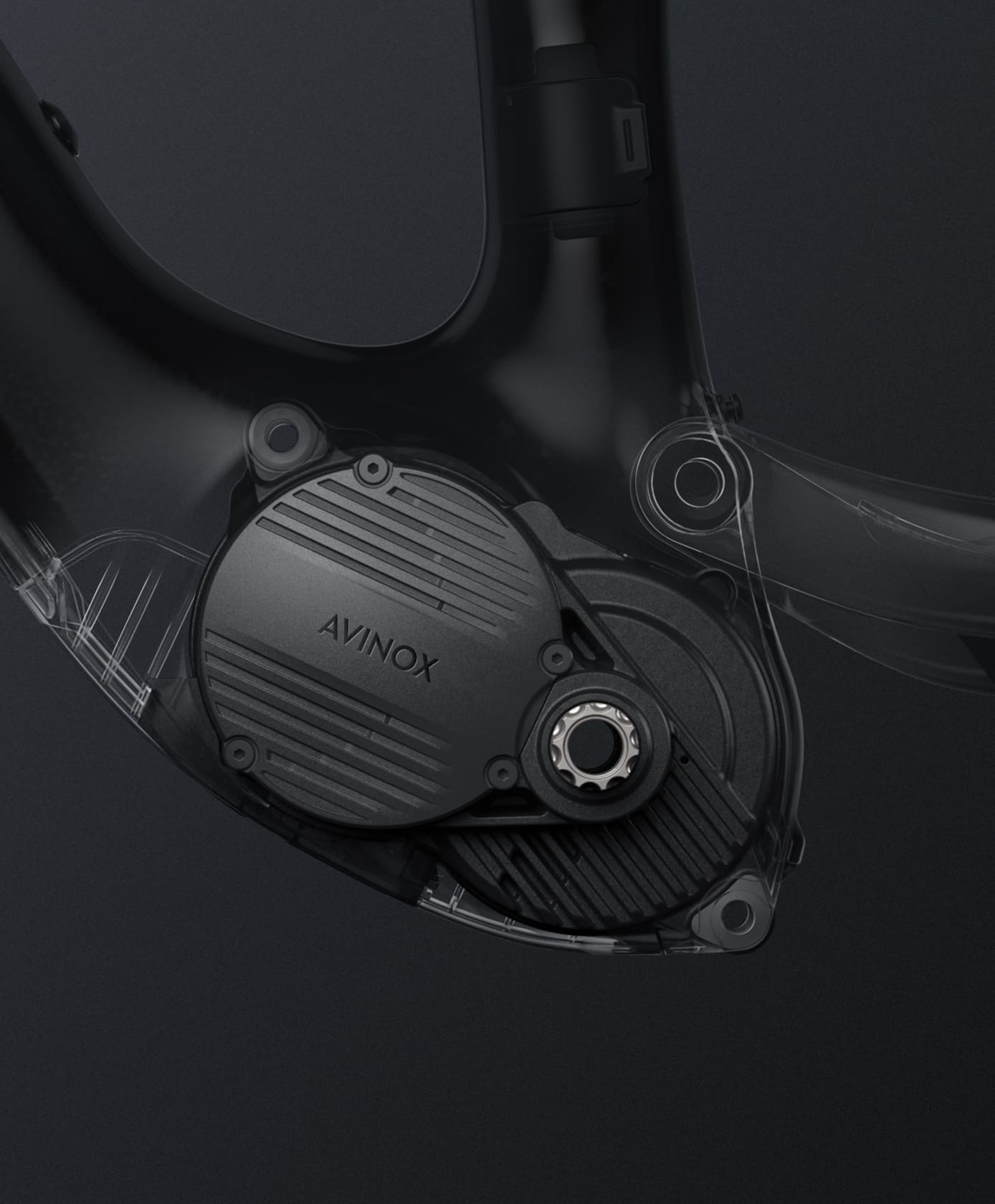
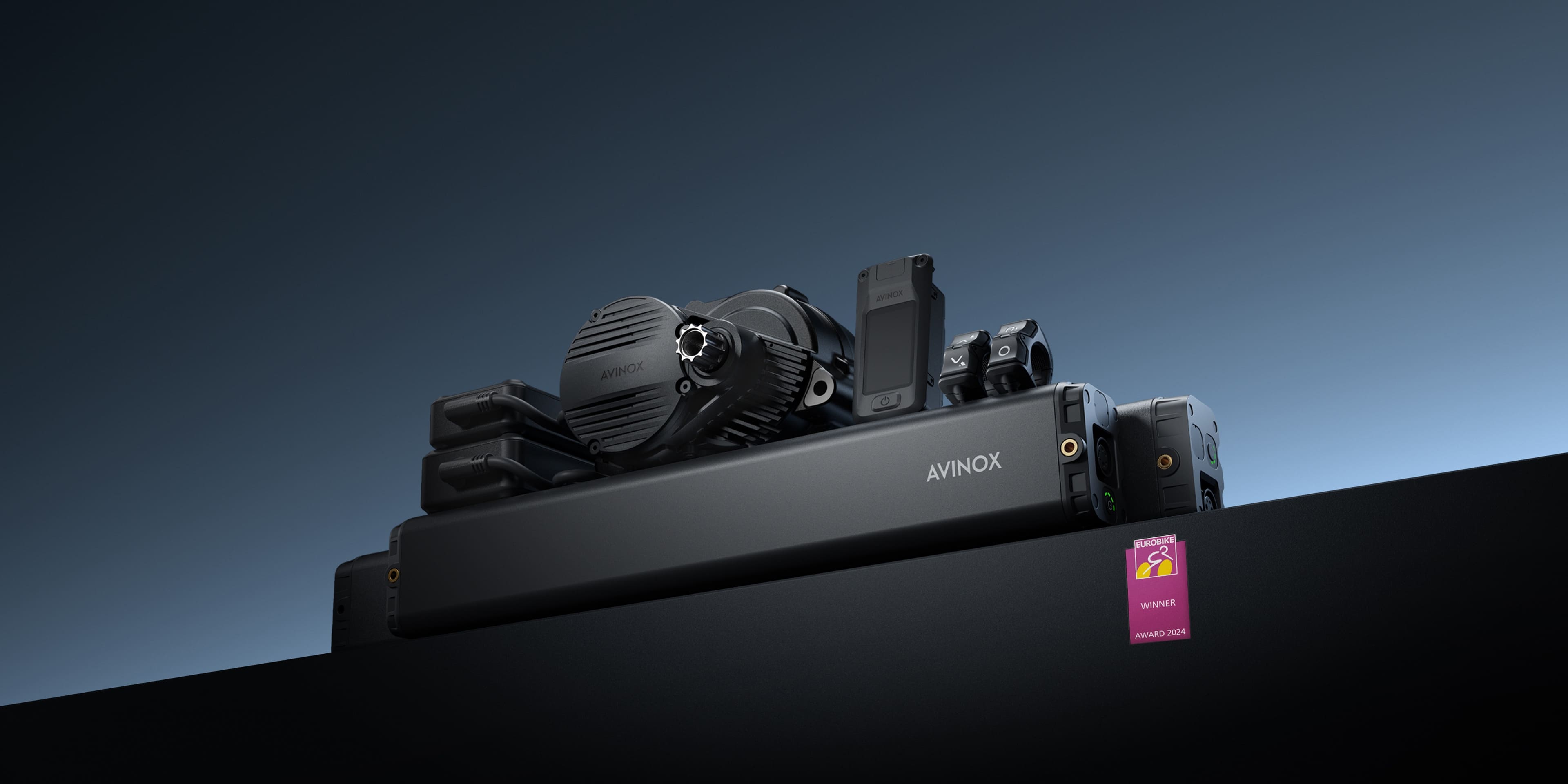
Avinox takes a different route to the same result. Its drive units use high-strength, high-toughness polymer materials to suppress noise when the gearbox operates at high speed, and the M2S features a dual-meshing gear design that eliminates gear backlash, which reduces pedal kickback noise. Avinox publishes a sound pressure level of 45 dBA or below for the M2S, M2, and M1, measured under its own lab conditions, and labels the M2S lowest of the three for noise, the M2 low, and the M1 moderate. All three carry an IP66 rating, which covers dust and powerful water jets, a common route to bearing wear.
Two things outside the motor also matter. Frame construction changes how much of the sound reaches you, since a large-volume frame can act as a soundbox for the motor mounted inside it. And a bike that is quiet in a showroom can be loud on a trail, because tires, chain, and suspension hardware contribute more noise than the drive unit does at speed.
Frequently Asked Questions
Is a Noisy E-Bike Motor Covered Under Warranty?
Usually yes if the noise comes from a defect within the warranty period, and usually no if it comes from wear, impact damage, water ingress, or a motor opened outside the service network. Terms vary by brand, so check yours before authorizing any work.
Can You Spray Lubricant Into an E-Bike Motor to Quiet It?
No. Aerosol lubricants thin the grease the gears depend on and can reach the stator windings or a brake rotor. A geared hub needs the correct grease applied inside during a proper service, not a spray through the axle gap.
Can Washing an E-Bike Cause Motor Noise?
Yes, if the water is pressurized. Motor and bearing seals are designed to shed spray, not to resist a jet, and water forced past them causes the corrosion and grease washout behind a lot of bearing noise. Rinse at low pressure and avoid aiming at the hub or bottom bracket.
Why Does My E-Bike Only Make Noise When Starting From a Stop?
Starting from a standstill is the highest-torque moment in a ride, so it exposes loose axle hardware, worn gear teeth, and a slipping clutch before anything else does. Pull away with a light pedal stroke instead of full throttle and see whether the noise moves.