Insights Blog
1000W E-Bike Motors: Speed, Heat, Battery Draw and Legal Limits
A 1000W e-bike motor delivers torque for hills and load, not four times the speed of a 250W system. It costs range, generates heat that prompts the controller to reduce power, and changes the bike's legal classification in most markets. On top of that, 1000W can describe a continuous rating, a brief peak or a controller limit, and those three are regulated differently.
What a 1000W Motor Rating Actually Measures
A 1000W figure states one of three things: continuous rated power, short-term peak power, or the controller's electrical limit. Continuous rated power is the one measured against a defined test method, and it is the figure the road-legal frameworks below are written around. Retail listings for 48V 1000W hub kits routinely mix all three on one product page.
Continuous rated power is the output a motor holds at thermal equilibrium without overheating, measured on a test bench. Peak power is what the same motor delivers for a few seconds before winding temperature climbs. EN 15194, the European standard for electrically power assisted cycles, sets the test procedure, and a motor qualifies at 250W when its output does not exceed 250W after reaching thermal equilibrium. The standard does not cap the bursts above that figure.
Current mid-drive hardware shows how wide that gap can be. The Avinox M1, M2 and M2S drive units each carry a rated power of 250W, with peak power of 1000W on the M1, 1100W on the M2 and up to 1500W on the M2S depending on the battery fitted. A unit rated at 250W with a 1000W peak meets the EU and UK power limit for a pedal cycle, because that limit is written against continuous rated power. A motor with a 1000W continuous rating does not.
Watts and torque are separate quantities. Power is the rate of energy transfer, while torque in newton meters is what turns the wheel against a gradient, and a motor produces torque roughly in proportion to the current through it. Two motors quoting the same wattage can differ in winding design, gearing and controller current, which is what shapes how the bike behaves on a climb.
How Fast a 1000W E-Bike Really Goes
Quadrupling power from 250W to 1000W adds about 60 percent to flat-ground speed and close to three times as much climbing speed. Air resistance grows sharply with speed and gravity does not, so the same power produces very different results depending on the terrain.
Speed on Flat Ground
On level ground in still air, 250W of sustained output settles a 100 kg rider and bike at roughly 30 km/h, and 1000W settles the same bike at roughly 50 km/h. Rolling resistance rises roughly in line with speed, while aerodynamic drag rises with the square of speed, so the power needed to overcome it rises with the cube. Above about 25 km/h on an upright bike, air is the dominant load and every additional km/h costs disproportionately more.
Speed on Climbs
On a 10 percent gradient, the same step from 250W to 1000W moves sustainable climbing speed from roughly 8.5 km/h to roughly 29 km/h. Gravity does not resist harder as speed rises, so climbing power converts almost linearly into climbing speed. Steep gradients, cargo loads and headwinds are where sustained output makes the clearest difference.
Voltage Changes Speed and Torque at the Same Wattage
At a fixed 1000W, a higher-voltage system runs faster and produces less torque. A brushless motor's no-load speed is set by supply voltage, so moving the same hub motor from 48V to 72V raises unloaded wheel speed by roughly the voltage ratio, around 50 percent.
Current accounts for the other half. 1000W needs about 21A at 48V and about 14A at 72V, and torque is roughly proportional to current, so the 72V build trades torque for speed while losing less energy to resistance in the controller and wiring. Raising pack voltage past what the controller capacitors and the motor's designed rpm allow is a separate failure mode, and neither configuration sits inside a road-legal category.
Why 1000W Motors Overheat and Lose Power
Resistive heating in the windings scales with the square of current, so a motor asked for more torque heats up far faster than the torque increases. Taking a hub motor from 50 N·m to 85 N·m calls for about 70 percent more current and produces close to three times the winding heat.
Hub motors are particularly exposed on slow, steep climbs, which is often why they are bought. At low speed the wheel, and so the motor, turns slowly under heavy load. Efficiency falls away from the designed operating band, a larger share of the input becomes heat instead of torque, and the slow-turning wheel generates little airflow across the casing. Direct-drive hubs hold useful thermal mass, but the heat escapes through the axle and dropouts, which is not an efficient path.
A mid-drive at the cranks runs through the bike's own gears, so it stays near its efficient rpm while the wheel turns slowly. It wastes less energy as heat for the same wheel torque, though it has less material to absorb what it does produce.
Controllers respond to rising temperature by reducing current, so sustained output on a long climb often sits well below the number on the casing. That is thermal protection working. Its absence on cheaper kits without a temperature sensor is a bigger risk, since prolonged overheating degrades winding insulation and can weaken magnets.
Thermal design is a large part of what sets the sustained figure. The Avinox M2S integrates a temperature sensor alongside cooling fins and flat wire windings, which improves heat dissipation and energy conversion efficiency and supports stable output under sustained load.
Battery, Controller and Wiring Requirements
Peak power is a property of the whole system rather than the motor alone. The pack supplies the current, the controller passes it and the wiring carries it, so a high-output motor on an under-specified pack delivers less than its rating.
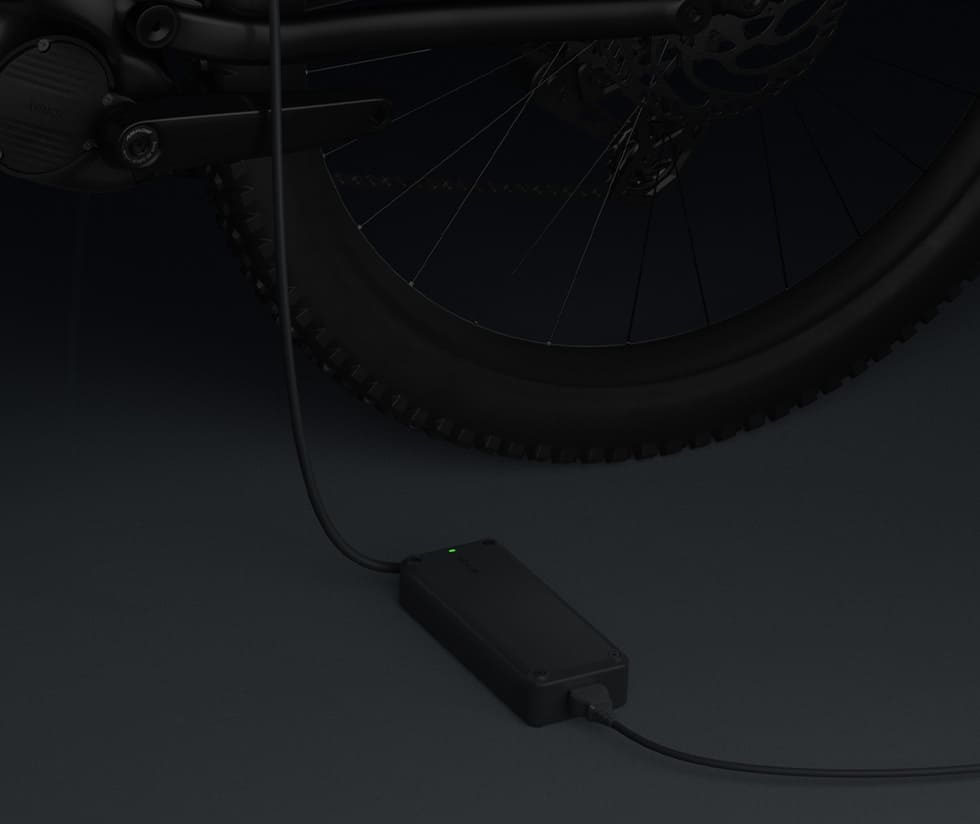
That dependency is explicit in current hardware. Reaching the 1500W peak on the Avinox M2S in Boost mode requires the Avinox FP700 or RS800 battery, and reaching it in the regular assist modes requires the FP700. Paired with the FS800 or FS600, the same drive unit peaks at 1300W. The drive unit does not change between those cases, and the peak figure follows the battery. Ignoring conversion losses, 1500W at the FP700's 36.1V nominal voltage implies a current draw above 40A.
Under-specified packs sag under load, so delivered power falls below what the controller requested, and the management system may cut out to protect the cells. Internal resistance turns part of the draw into heat inside the pack, reducing usable capacity and shortening cycle life. Controller current sets the other ceiling. A 15A controller on a 48V pack limits the system to about 720W, whatever the motor is rated for.
Range follows energy per distance rather than battery size alone. At 250W and 30 km/h a system uses about 8.3 Wh per kilometer. At 1000W and 50 km/h it uses about 20 Wh per kilometer. A 720Wh pack covers roughly 86 km in the first case and roughly 36 km in the second, before conversion losses and cold weather.
This is why fitting a high-torque motor to a bike built around a 250W system does not produce high torque. Wiring gauge, connector rating, fuse rating and controller limit need to move together.
Brakes, Tires and Drivetrain at 1000W
A 1000W build calls for hydraulic disc brakes with larger rotors, tires approved for the speed, torque arms on a hub motor and a steel cassette on a mid-drive. Kinetic energy rises with the square of speed, so a 100 kg rider and bike arriving at 50 km/h instead of 25 km/h carries four times the energy into every stop, roughly 9.6 kJ against 2.4 kJ.
-
Brakes. Rotors of 180 mm or 203 mm spread that heat over more material and resist brake fade on long descents. Ontario sets a measurable benchmark for a legal power-assisted bicycle, requiring a full stop from 30 km/h within nine meters on a clean, paved and level surface.
-
Tires. An ECE-R75 approval, often marked E50, certifies a tire for e-bikes with a maximum speed of 50 km/h. Standard bicycle tires are not built for that combination of speed, weight and torque.
-
Dropouts. A hub motor transmits its full torque into frame dropouts designed for pedal loads. Torque arms spread that load, and spoke tension needs checking more often than on an unpowered wheel.
-
Chain and cassette. A mid-drive sends motor torque through the rider's own chain, shortening chain and cassette life. A steel cassette survives it better than a lightweight alloy one.
Where a 1000W E-Bike Is Legal
A continuous rating of 1000W sits above the power ceiling for bicycle status in the EU, the UK, Australia and Canada, and above the 750W figure in US federal product law and in most state vehicle codes. Oregon, whose vehicle code defines an electric assisted bicycle at up to 1,000 watts, is the main exception. Each framework below tests rated continuous output and the assisted speed cut-off, not brief peaks during acceleration.
| Market | Power limit for bicycle status | Assisted speed limit | Status above the limit |
|---|---|---|---|
| EU | 250W maximum continuous rated power, Regulation (EU) No 168/2013 Article 2(2)(h) | Progressively reduced and cut off before 25 km/h | Type approval required as an L-category vehicle |
| UK | 250W continuous rated power, GOV.UK EAPC rules | Motor must not be able to propel the bike above 15.5 mph (25 km/h) | Classed as a motorcycle or moped, requiring registration, tax, insurance, a license and an approved helmet |
| US federal | Less than 750W, 15 U.S.C. § 2085 | Under 20 mph on motor alone with a 170 lb rider | Cannot be sold as a low-speed electric bicycle |
| US states | Most use 750W within the three-class system; Oregon allows up to 1,000W under ORS 801.258 | 20 mph for Class 1 and 2, 28 mph for Class 3 | Moped or motor vehicle rules set by the state |
| Australia | 250W continuous for an EPAC built to EN 15194, applied state by state, for example the Queensland e-bike rules; New South Wales currently allows 500W under an announced phase-out | Assistance cut off at 25 km/h | Treated as a motor vehicle, and in practice not registrable |
| Canada | 500W continuous for a power-assisted bicycle, applied provincially, for example Ontario Regulation 369/09 | 32 km/h | Provincial motor vehicle rules |
Losing bicycle status removes access to bike lanes and shared paths, and adds registration, insurance and licensing obligations that most 1000W bikes cannot meet, because they were not submitted for vehicle type approval. In the UK an uninsured machine in that category can be fined or seized. These rules are amended periodically and local authorities add their own restrictions, so check the current text with the linked authority before buying or riding.
US rules sit on two layers. The federal figure governs what may be sold as a bicycle, while each state decides where and how it may be ridden, so a 1000W bike can be lawfully bought in one state and unlawful to ride on a path in the next.
Off-Road Modes Do Not Restore Legal Status
A bike that can be switched above the limit does not meet the limit. The UK definition is written around capability, requiring that the motor of an electrically assisted pedal cycle must not be able to propel it above 15.5 mph. A display menu, a button sequence or a mode labeled for off-road use that removes the cut-off means the machine fails that test on a public road, whether or not the mode is active at the time. The EU exemption reaches the same outcome by a different route, applying only where motor output cuts off before 25 km/h.
Insurance is unlikely to cover a claim involving a machine outside its declared category, and manufacturer warranty coverage generally excludes derestriction. Private land with the landowner's permission and dedicated off-road venues sit outside road traffic rules, which is where these systems are straightforward to use.
UK rules also require markings showing the continuous rated power and the manufacturer, plus either battery voltage or the maximum speed the motor can propel the bike. Removing or replacing a marking to disguise a higher-rated motor does not change what the motor is, and a missing marking is itself a compliance failure.
How to Check a Motor's Real Power Rating
Read the motor marking, the controller current and the cut-off behavior rather than the headline figure in a product listing. The marking on the motor casing or frame plate should state continuous rated power and the manufacturer.
The wording of a specification matters just as much. Peak, max and nominal are not interchangeable with continuous rated power, and a listing quoting only a peak figure has not answered the compliance question. A page showing both 250W and 1000W for the same motor is describing two different measurements and needs to be clarified before purchase.
The controller gives an independent check. Battery nominal voltage multiplied by the controller's continuous current limit approximates the electrical power the system can sustain, so a 48V pack behind a 22A controller is a 1,050W system whatever the sticker says. Then ride it and watch the cut-off. Assistance should taper and stop below the local limit, with no user-accessible route past it.
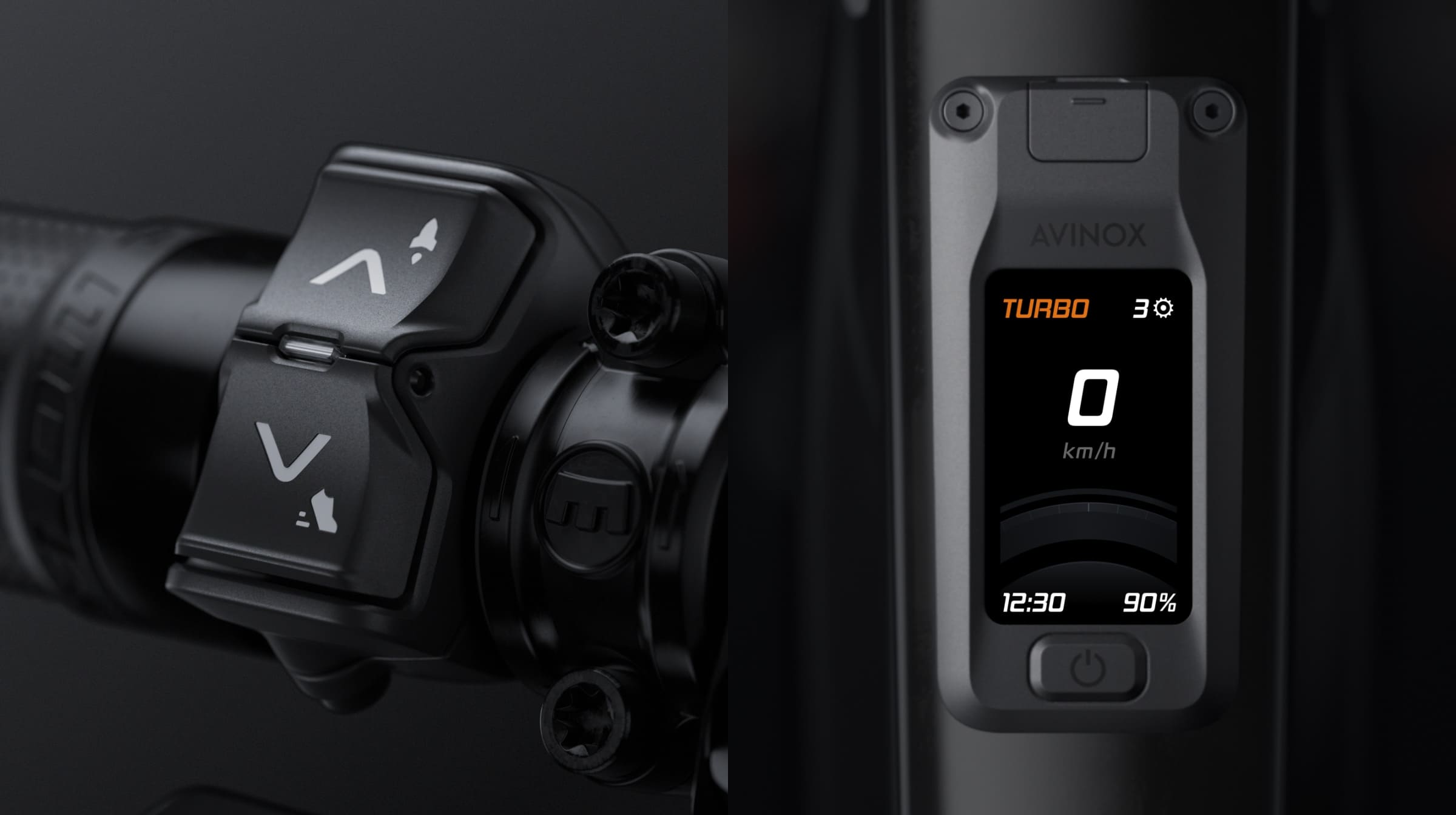
For climbing performance rather than a headline number, a more useful specification is peak torque from a compliant system paired with gearing that keeps the motor in its efficient band. Avinox Boost mode shows the range available inside a 250W rating, with up to 60 seconds at 150 N·m on the M2S, and Boost torque of 125 N·m on the M2 and 120 N·m on the M1.
Frequently Asked Questions
Do You Need a License for a 750W E-Bike in the UK?
Yes. The UK caps an electrically assisted pedal cycle at 250W continuous, so a 750W machine counts as a moped or motorcycle and needs a license, registration, tax and insurance. US federal law uses 750W as its ceiling, which is where the confusion starts.
Is a 48V 1000W Motor Legal?
Voltage is not the legal test. What counts is continuous rated power and the assisted speed cut-off. A 48V system rated 250W continuous that stops assisting at 25 km/h is compliant in the EU and UK. The same pack behind a 1000W rated motor is not.
Does a 1000W Motor Use More Battery at the Same Speed?
No. At the same speed, weight and gradient a larger motor draws broadly the same power, because consumption is set by the resistance the bike is overcoming. The extra drain appears only when the rating is used, where energy per kilometer roughly doubles.
Can a 250W Motor Climb as Well as a 1000W Motor?
On short and moderate climbs, often yes. The 250W figure caps sustained output at thermal equilibrium, not the short bursts on a ramp, and a well-geared mid-drive puts high peak torque through the bike's gears. The gap opens on long climbs under load.
Is 1000W Too Much for Daily Commuting?
For flat urban commuting, usually yes. The extra weight, shorter range and loss of bike lane access outweigh acceleration a rider cannot legally use. The case changes with sustained steep gradients, heavy cargo or genuinely off-road routes, where continuous output becomes the limiting factor.